 Book or enquire
Children communicate best through play. Sessions give them a safe, supportive space to express themselves, process emotions and work through challenges in a way that feels natural to them.
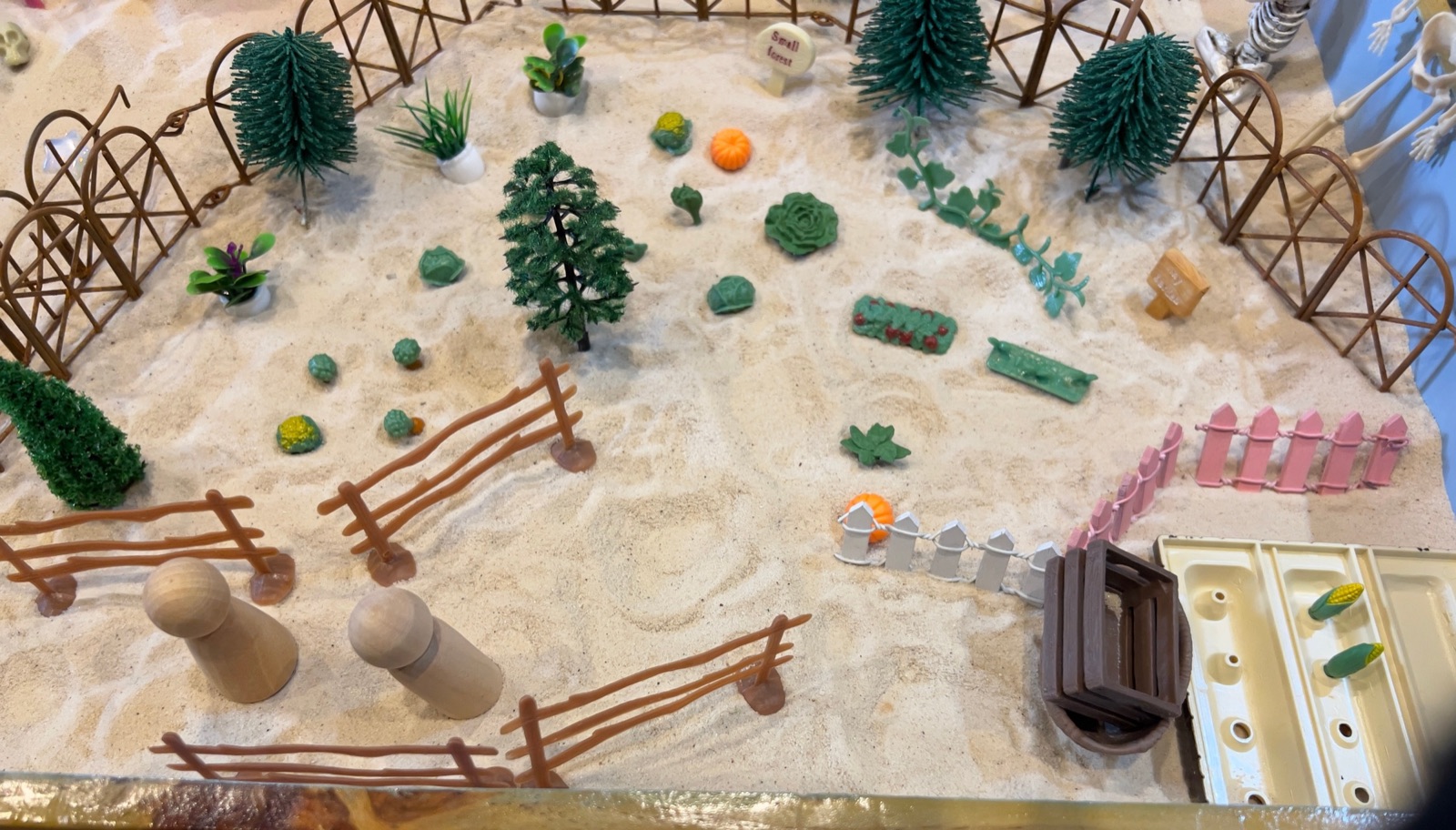
Using a wide range of creative tools, including art materials, the sandtray, puppets, stories and guided visualisations, children are encouraged to explore their feelings at their own pace.
We primarily use a non-directive approach, allowing the child to lead the way, while occasionally bringing in gentle directive techniques to provide support when needed.
Play therapy is highly effective for children experiencing:
Through this process, children develop emotional resilience, self-awareness and coping skills in a warm and understanding environment.
Sometimes, words aren't enough to express what's going on inside. Sandplay therapy offers a safe, creative and non-verbal way for children (and adults) to explore their emotions, process experiences and find healing.
Using a tray of sand and a collection of miniature figures, clients create scenes that reflect their inner world. This gentle approach allows for self-expression and emotional processing without the pressure of talking.
It is especially helpful for those dealing with anxiety, trauma, loss, behavioural challenges or emotional struggles.
I share themes and progress with you, but not word for word. That privacy is part of what makes therapy work. Safety concerns are always shared.
No. Play therapy is not an assessment. Where it would help, I'll suggest a referral to an educational psychologist, OT or paediatrician.
Keep it simple: "You're going to a special playroom with Bronwen. You can choose what to play with." There's no need to mention problems.
"To engage with the sand in a free and protected space is to exit ordinary time and space."Dr Barbara Turner
Most families begin with a parent consultation. We talk it through and decide together what would help.